Water Heater, Washer, or Dishwasher Leaking? What to Do First
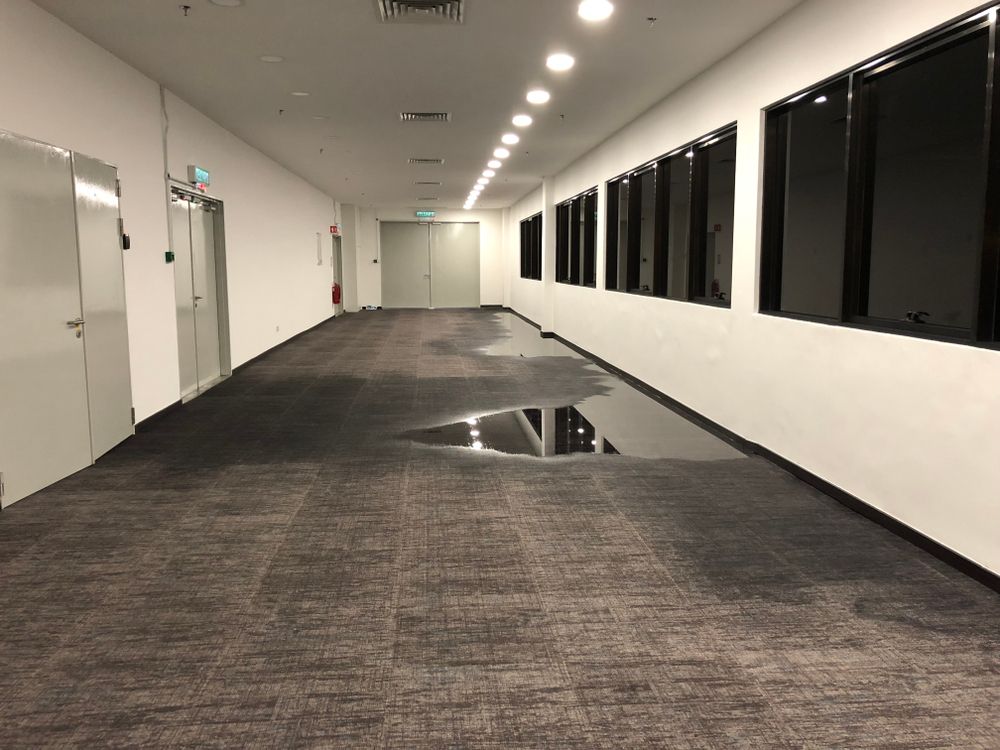
If there's water on your floor right now, stop reading in a minute and start acting. Appliance water damage in Louisville homes moves fast — water travels along the subfloor and into walls long before the surface looks that bad.
Call Kaufman Carpet Cleaning at (502) 266-5623 for same-day water damage help. We've served Louisville since 1972 and our technicians are certified in water remediation.
Here's what to do while you wait.
Do These Things First
- Stop the water — if you can do it safely. Most appliances have a shutoff valve behind or beneath them. Washing machines have hot and cold valves at the wall. Dishwashers usually have a valve under the sink. Water heaters have a cold-water shutoff on the line coming in at the top. If you can't find it or can't reach it, shut off the main water valve to the house.
- Stay out of standing water near anything electrical. Don't plug things in, don't unplug things, don't run a shop vac, and don't step into water near an outlet, a power strip, or the appliance itself. If water has reached outlets or the electrical panel area, keep everyone out and call an electrician.
- Keep kids and pets out of the room. Wet floors are slick and the water may not be clean.
- Photograph everything before you move or clean anything. Wide shots of the room, close shots of the appliance, the wet flooring, and any wet baseboards or cabinet bases. Do this first — it's much harder to document after cleanup.
- Move what's easy to move. Rugs off wet flooring, boxes and papers up off the floor, furniture legs onto blocks or foil. Don't drag anything heavy across a soaked floor.
- Get air moving. Open interior doors and cabinet doors under the sink. Run fans if it's safe to plug them in from a dry area.
What Not to Do
- Don't try to clean up contaminated water yourself. Dishwasher and washing machine discharge, and anything that has run through a drain line, is not clean water. That's a professional job with the right equipment.
- Don't assume a dry-looking surface means dry. Tile and vinyl look fine while the subfloor underneath is saturated.
- Don't pull up carpet or cut into drywall. Let the crew assess it. Pulling carpet without a plan can damage it beyond what was necessary.
- Don't use a household vacuum on water. It's not built for it and it's an electrical hazard.
- Don't mix cleaning products while trying to clean up — and never combine anything containing bleach with anything containing ammonia.
Why Drying Speed Matters More Than the Puddle Size
The visible water is rarely the real problem. Water wicks sideways into carpet pad, under baseboards, into the bottom edge of drywall, and into the seams of engineered flooring. Louisville's humidity means a wet structure dries slowly on its own, and a floor that "seems dry" on top can hold moisture underneath for a long time.
That's why extraction and structural drying equipment exist. Air movers and dehumidifiers pull moisture out of the building materials, not just off the surface — which is the difference between a floor that's dry and a floor that just feels dry.
If You See Mold
If there's visible mold — on drywall, on the back of a cabinet, on baseboards — that's a separate specialty. Mold remediation requires a qualified mold remediation professional, and it's not something we handle. Call one of them for the mold itself.
Call us about the water source and getting the structure dried out, which is the part that keeps the situation from continuing.
About Your Insurance
We can't tell you what your policy covers or how a claim will go — that's a conversation with your own carrier, and it's worth having early. What's generally wise regardless: photograph the damage thoroughly before cleanup, keep the failed part or hose if it came loose, and write down the date and time you found the water.
What Happens Once We're There
- We locate how far the water actually traveled, including areas that look dry
- We extract standing water and moisture from carpet, pad, and hard surfaces
- We set air movers and dehumidification to dry the structure, not just the surface
- We monitor progress until the materials are actually dry
- Once things are dry, we handle cleaning the affected carpet and flooring
If you're past the first hour and want the wider picture, our post on what to do after water damage strikes walks through the days that follow. Once drying is complete, residential carpet cleaning and repair is usually the last step.
Call Now — Every Hour Counts
Water spreads the whole time it sits. The sooner extraction and drying start, the less of your floor, pad, and wall material is affected.
Call Kaufman Carpet Cleaning at (502) 266-5623 for water damage restoration. We resolve issues the same day. If it's not urgent, you can also contact us through our site.